People have responded to the pictures I make as mystical things, and they somehow carry the illusion further thinking that the place is this mystical, magical place. The desert is also a very barren place, a very lonely place, a very boring, uneventful place.
Richard Misrach
Category: thoughts
my desert world

I live in the desert. Outside my door, behind me, there are miles of desert wilderness. And a national park. I take a lot of pictures there.
I also live on the edge of a small unincorporated settlement of about fifty residents. I don’t know for sure how many – I never think to ask. I manage a small campground here.
A cafe, gift shop and travel center, a WWII museum, and a 24 hr gas station and convenience store make up the town. It sits on a major interstate 30 miles from the nearest town and services. It’s a busy place – trucks and travelers 24 hours a day seven days a week. It’s the other side of my desert world. I need to show it too to give a true and honest picture of where I live and what I do.
might as well be me…
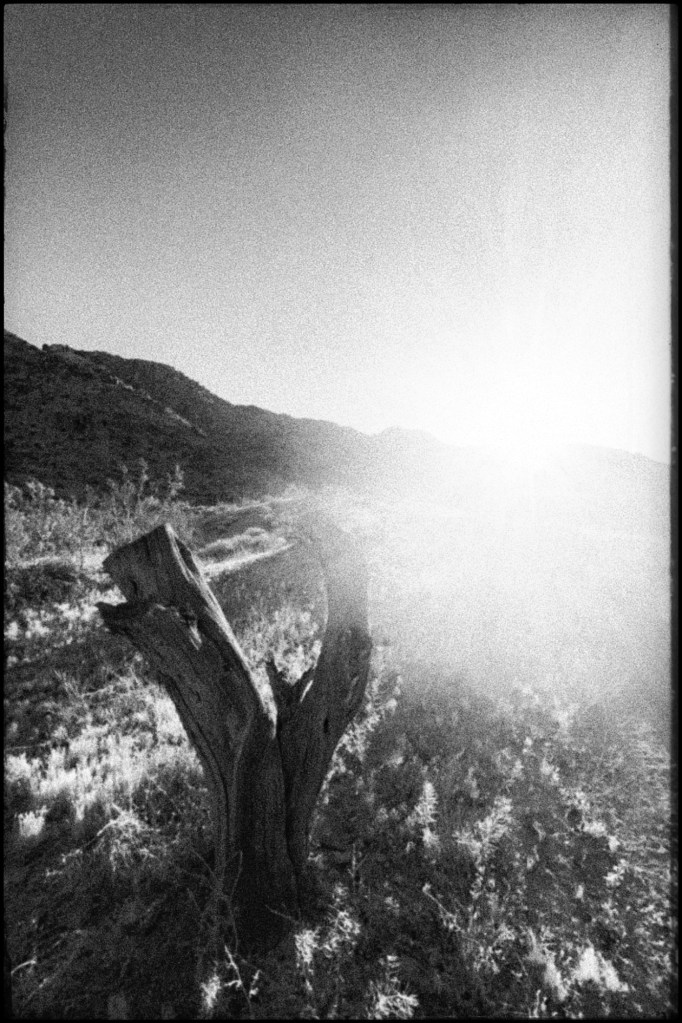
You see a lot of desert photography online. The blazing sunsets, the wildflower blooms, the silhouetted saguaros, the joshua trees and the rock formations. You’ve seen them all.
That’s all well and good – they make for nice decor. People like that. Seems to me though that somebody needs to show the desert in its everyday fierceness. Might as well be me.
’31 palo verdes’ – day 9
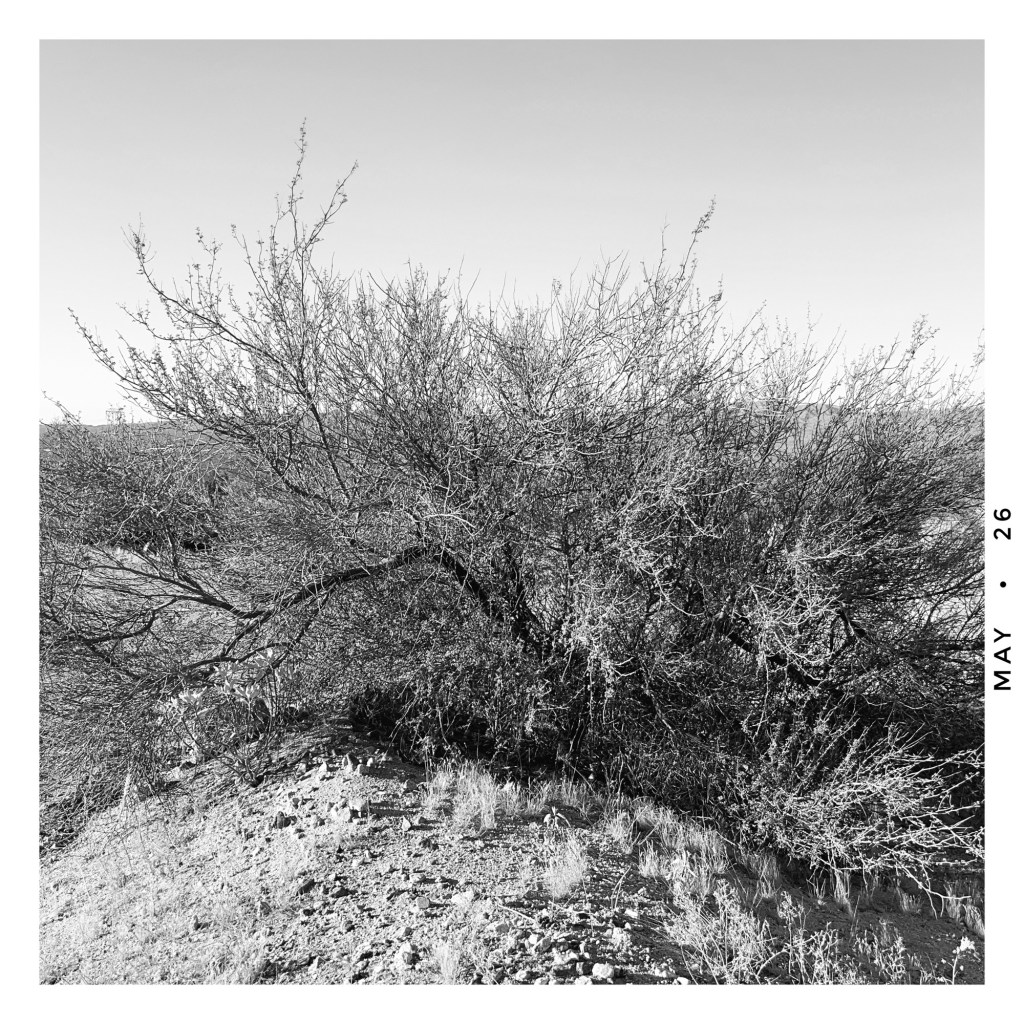
Palo verdes are an interesting tree. They tend to grow in an endless variety of shapes and can have some incredible sculptural qualities. But they’re not all like that.
I need to curb my tendency to overdramatize them. True, a mature palo verde sculpture silhouetted against the rising sun can be magnificently dramatic, and I will of course do some of them. They can also be quite nondescript, even scrawny. To give a true picture of palo verdes I need to show some of those too as I continue this series. And I will. It isn ‘t about how I can make them look. It’s about how they actually do look.
I need to keep in mind that I’m not the point of this series. Palo verdes are.
a new series
On May 1 I’m going to try something a little different, at least different for me. I’m going to post a month long series – ’31 Palo Verdes’.
I’ll do a new photo of a palo verde tree every day for the month of May, all taken here in the southern side of Joshua Tree National Park and the surrounding desert. My thought is to post one every morning, and it will have been taken that same morning, weather permitting. Sometimes I can’t get out due to the weather so it might not happen that way. If so I will have a few in reserve to choose from – the only rule will be that it has to be taken during May. It will all be new.
These will be done in snapshot format – square, black and white, with a snapshot border and a month/year date stamp like I’ve been doing.
So. It starts this coming Friday. Stay tuned. Who knows? It might even be interesting.
Cheers
cholla and morning sun
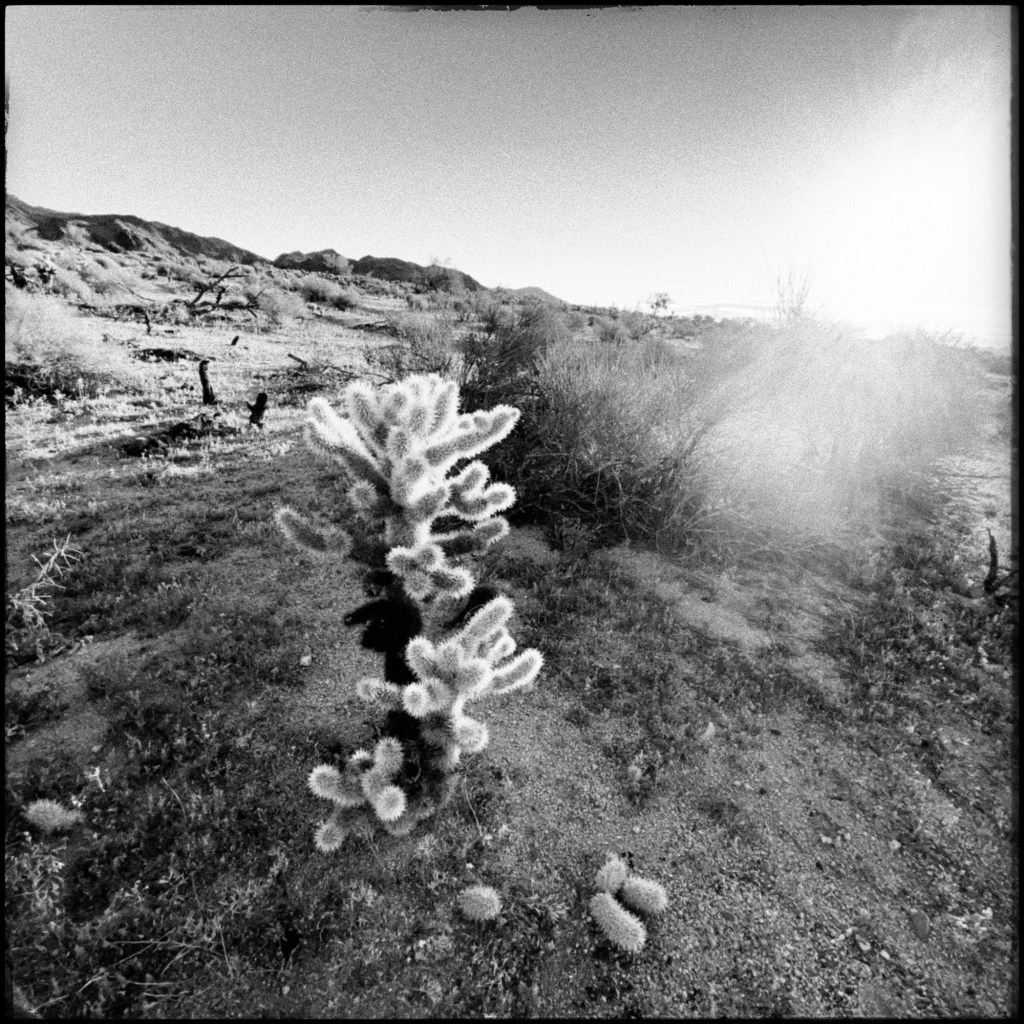
When you think of Joshua Tree National Park you naturally think of joshua trees and rock formations and rock climbing. That’s what the park is known for.
Joshua Tree sits on the transition zone of two deserts. The north side, the more well known side with the rocks and joshua trees is in the Mojave Desert. The south side is in the Colorado Desert, a sub-desert of the Sonoran. It’s an area of chollas and ocotillos and canyons and rocky mountain slopes. There are no joshua trees in the southern half.
The south side of Joshua Tree National Park, though not unknown, isn’t as well traveled as the north side. Other than the highway through the park there are few roads there. It’s largely wilderness and hiking trails. I live along the southern boundary of the park. I can step out my door and walk right in. It’s where I wander and take pictures most every day.
sunrise, sunset
You know, when you scroll through desert images in Google, or any other browser for that matter, you’ll see an endless stream of super-saturated sunrises and sunsets. Thousands of them, all pretty much the same. The same is true for many photographers websites. Sure, sunsets like that happen. Not as saturated and spectacular as most of those photos suggest, but they happen. But not all that often. Much of what passes for desert photography is misleading.
I’ve managed this small campground on the southern boundary of Joshua Tree National Park for ten years now, and I’ve heard it hundreds of times. People come in to camp for a day or two and say they can’t wait to see one of those magnificent sunsets. I tell them it’s not likely though it should be a beautiful evening anyway, but expectations are high. Sometimes they leave disappointed. Now and then someone even feels cheated as if they’re owed a mind-blowing show. I sometimes think if they had to pay to camp here some would demand their money back.
The desert is an incredible place, but the reality of it is far different from the preconceived notions and expectations many come here with, and I think much of the desert photography that floods the internet has a lot to do with those misconceptions.

