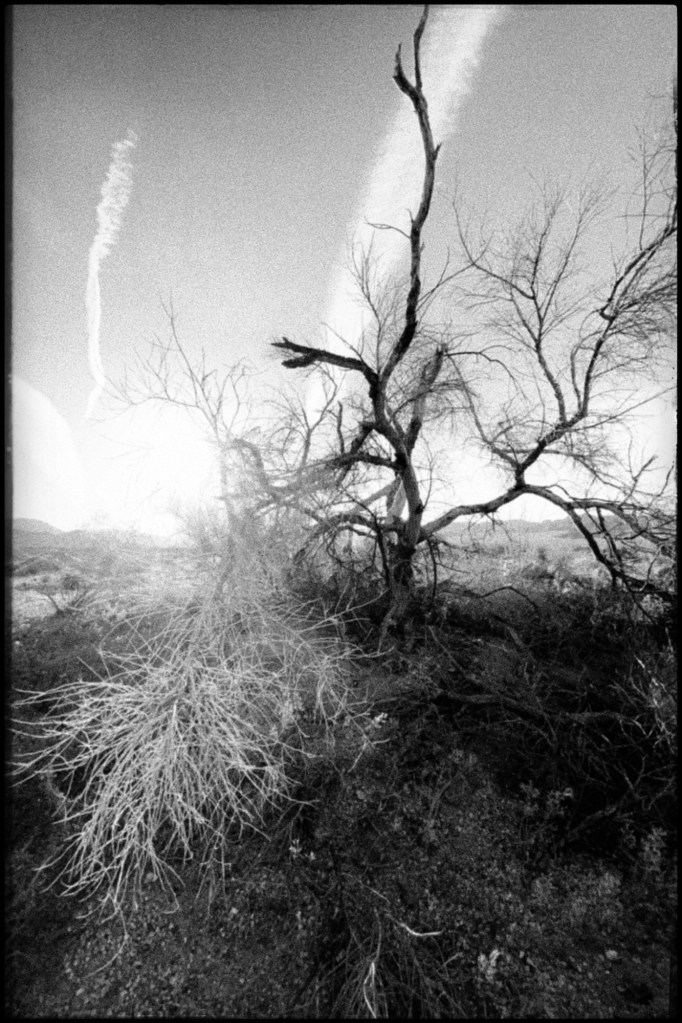
This southern California desert is rough country. It deserves rough photos to convey its fierce nature. That’s what I try to get across.
In the very end, civilizations perish because they listen to their politicians and not to their poets – Jonas Mekas
This southern California desert is rough country. It deserves rough photos to convey its fierce nature. That’s what I try to get across.
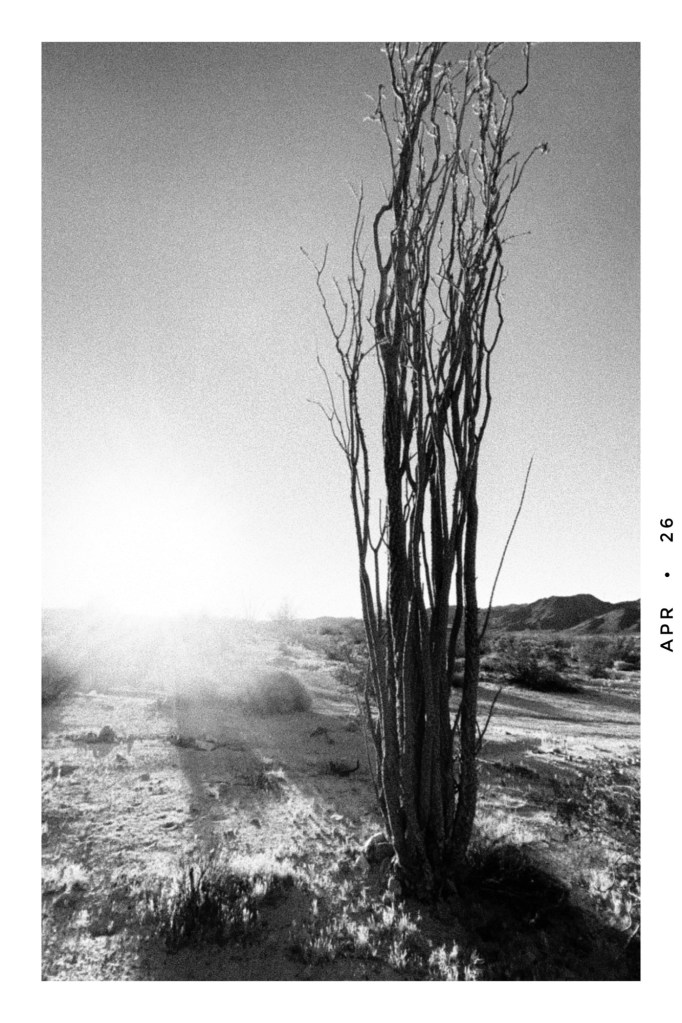
“I am a passionate lover of the snapshot, because of all photographic images it comes closest to truth.”
Lisette Model
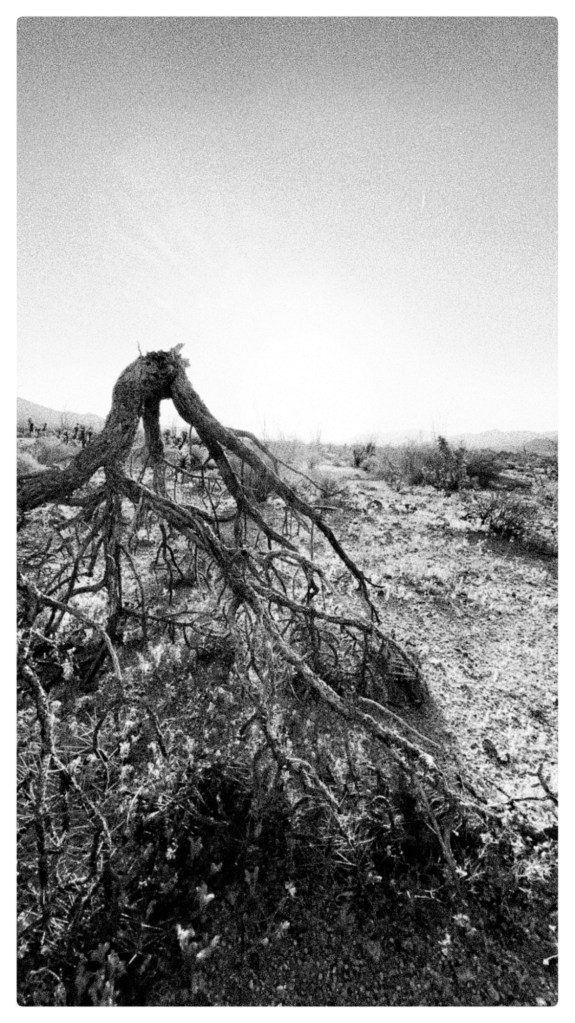
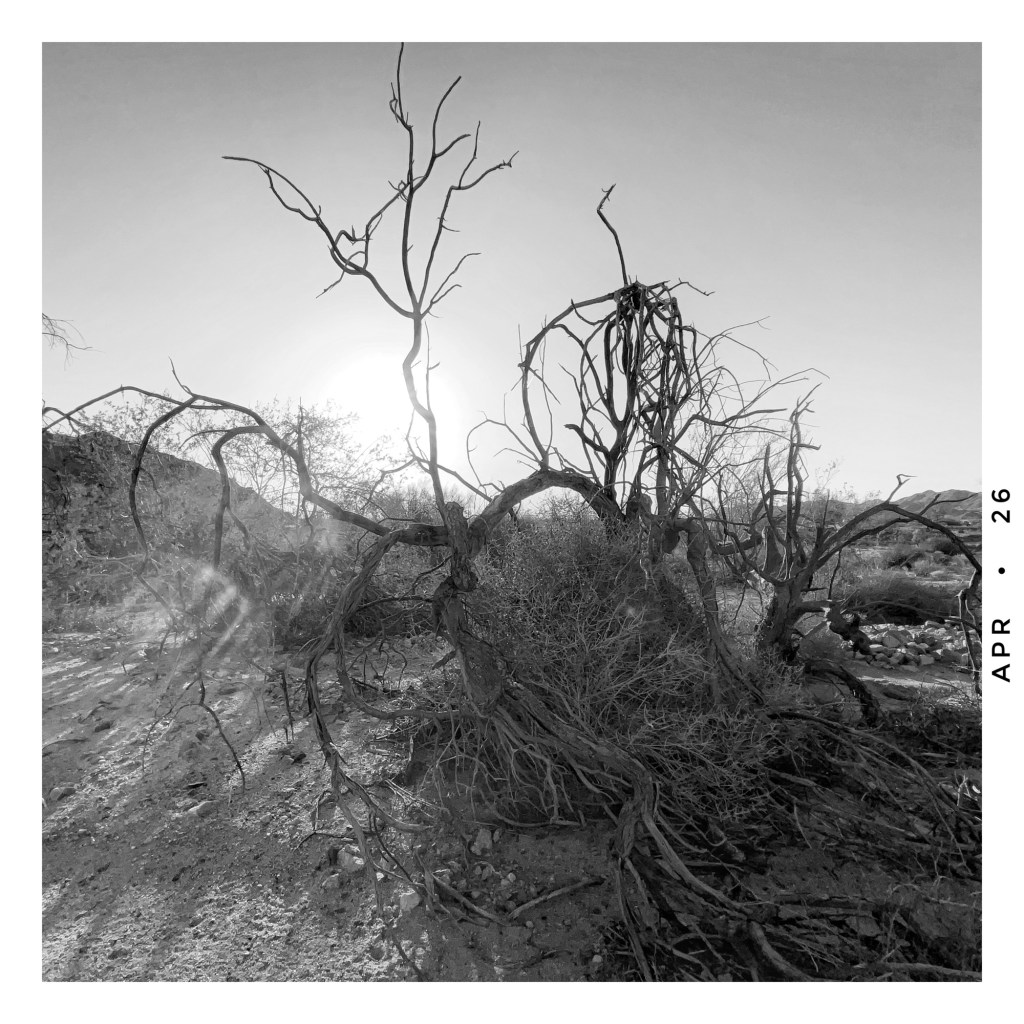
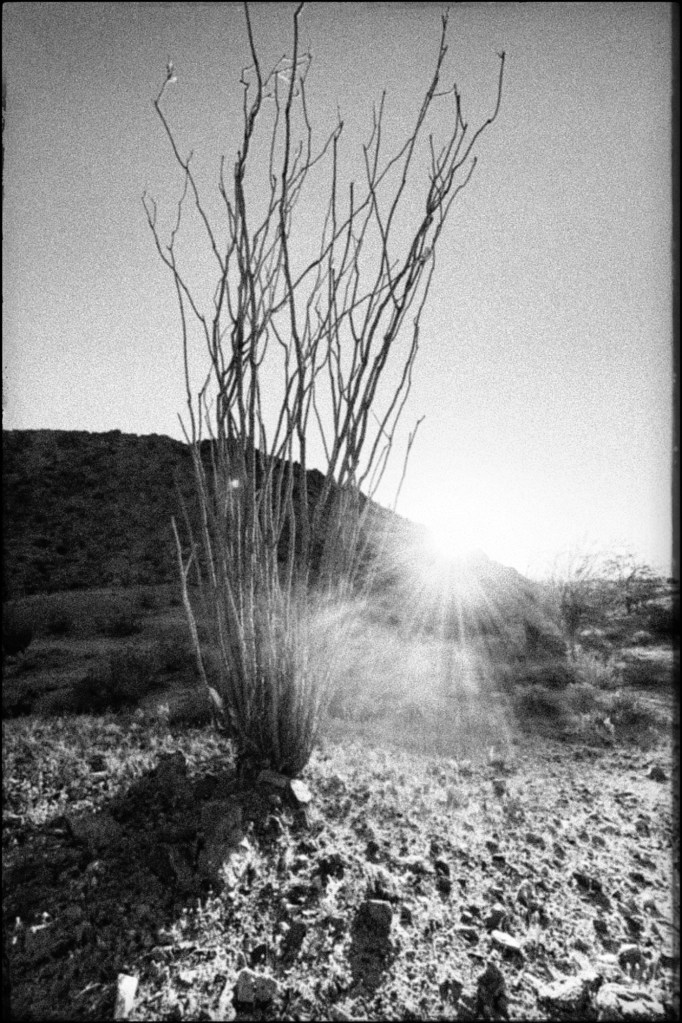
That may be a bit of a stretch, but then again… there is more than a little truth to that. There is no pretense, no theatrics, no attempt to be ‘arty’ in simple snapshots. They’re real and honest. There can be more art in that than in all the attempts to grab a viewer by the eyeballs.
I’ll play around with different things once in awhile like double exposures, adding a vintage look and the like, and sometimes they work, but mostly I just adjust the tones and contrast a bit (I use Snapseed if you care), maybe add a little grain, and slap a border and date on it and call it good. If I have to spend more than two or three minutes on a picture I figure it didn’t work and I shitcan it. I have others to choose from.
The desert, and any place else for that matter, speaks for itself, and doesn’t need theatrics or dramatic color or anything else. The art, if you want to call it that, is in how you see your world and how you choose to fit what you see into a rectangle or square. Anything more than that can be like putting legs on a snake.
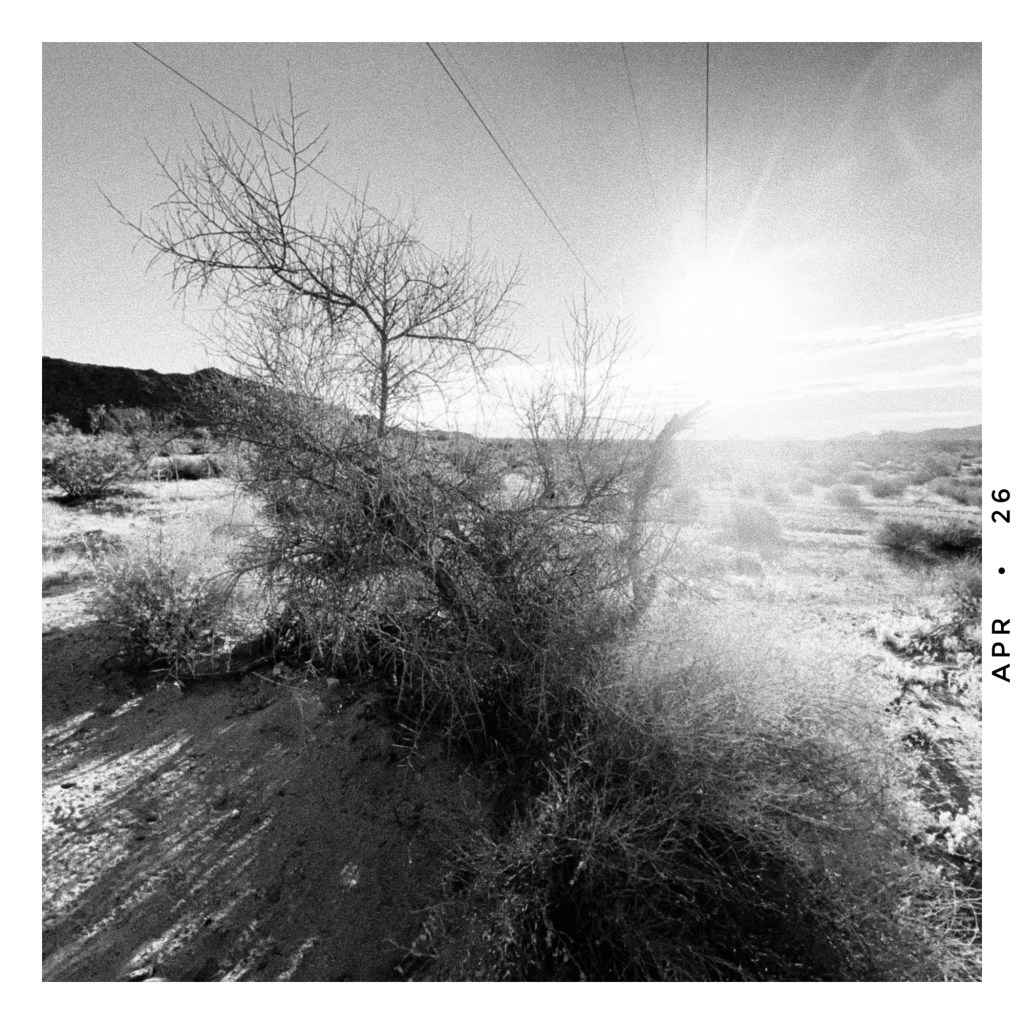
When you think of desert plants cactus immediately come to mind. But there are others. There is much desert plant life that thrives in this hot, arid climate.
One of the more common ones is the palo verde. It’s instantly recognizable with its green bark, yet every one is a unique individual. They grow in all shapes and sizes. A visual feast.
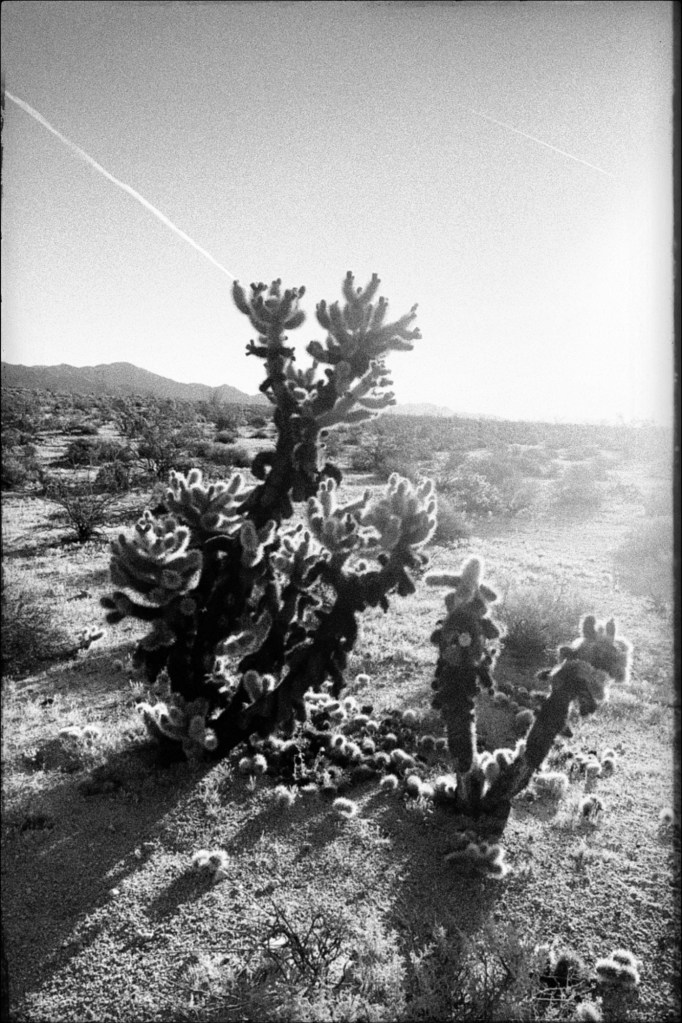
Of all the California desert plant life the cholla is one of the dominant ones. Every one is unique, and they come armed with these land mines you have to stay on the lookout for.

